
Quick answer:
Yes, composite bonding can often help improve transparent tooth edges after Invisalign, especially when the edges are mildly worn, uneven, chipped, or thin-looking. The dentist applies carefully matched tooth-coloured resin to rebuild and refine the edges, helping them look smoother, fuller, and more natural. However, the cause matters. If the transparency is linked to acid erosion, grinding, clenching, or enamel wear, this should be assessed first so the bonding is planned properly and protected for the long term. In many cases, the best sequence is Invisalign first, whitening second, and composite bonding third, so the final result blends beautifully with your natural smile.
Now that we’ve gone through our quick answer, let’s look a little bit more in detail at this interesting topic.
Finishing Invisalign can feel like a lovely milestone. Your teeth are straighter, your smile feels more balanced, and you may finally feel closer to the result you had in mind.
Then, in certain lights, you notice something new.
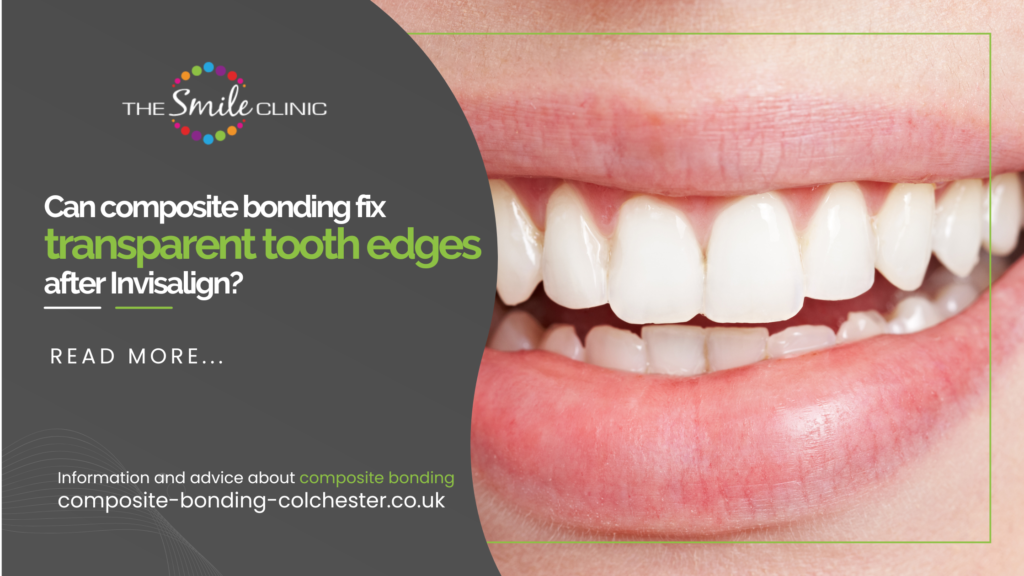
The edges of your front teeth look a little see-through. Perhaps they look thin, uneven, greyish, or slightly worn. You may not have noticed it before treatment, but now your teeth are in better alignment, those delicate edges seem much easier to see.
This is a common concern, and it can feel frustrating. You have done the work of straightening your teeth, worn the aligners, followed the plan, and now there is another detail catching your eye.
Composite bonding may be able to help, but the right answer depends on why the edges look transparent in the first place.
Composite bonding is a carefully applied tooth-coloured resin that can be used to refine shape, smooth small chips, rebuild worn edges, and create a more even smile. When planned well, the result should look natural, not heavy or artificial. Think of it less as “covering” the tooth and more as carefully restoring the detail that has been lost.
Why are my front teeth see-through at the edges?
A small amount of translucency at the tips of the front teeth can be completely natural. Enamel has a glass-like quality, and the thinner the enamel is at the edge, the more light can pass through it.
However, transparent edges can become more noticeable when enamel has thinned over time. This may happen because of acid erosion, tooth grinding, clenching, everyday wear, or small chips along the biting edge.
Acid erosion is one of the common reasons teeth can begin to look thinner or more transparent. This can be linked with acidic drinks, citrus fruits, fizzy drinks, sports drinks, reflux, or brushing too soon after eating or drinking something acidic. The enamel gradually loses some of its thickness, a little like sea glass being smoothed by the tide.
Grinding and clenching can also play a part. Even if you do not notice yourself doing it, the edges of the front teeth may slowly wear down. The result can be shorter, flatter, thinner-looking teeth.
Invisalign itself does not usually cause transparent edges. What it can do is make you more aware of them. Once teeth are straighter, the edges may line up differently. Your eye may start noticing details that were hidden by crowding or uneven positioning before.
This is why a proper assessment matters. Before recommending bonding, your dentist will want to understand whether the transparency is mainly cosmetic, or whether there is an active cause that needs to be managed first.
Composite bonding after Invisalign, what happens next?
After Invisalign, many patients consider small refinements. Straight teeth can still have uneven edges, small chips, worn corners, or slight differences in shape. Composite bonding can be a beautiful final step when it is suitable.
The first stage is a consultation. Your dentist will look at the health of your teeth and gums, your bite, your enamel, your tooth shade, and how your smile moves when you speak and laugh. This is important because bonding is not just about adding material. It needs to work with your face, your bite, and your natural tooth shape.
If the transparent edges are mild to moderate, composite may be layered onto the tooth edges to rebuild shape and reduce the see-through effect. The shade and translucency of the material need to be selected carefully. Front teeth are not one flat colour. They have depth, light, and tiny variations. Good bonding respects that.
The treatment itself is usually conservative. In many cases, little or no drilling is needed. The tooth surface is prepared, the resin is applied in layers, shaped, set, refined, and polished. The aim is a smooth finish that catches the light in a natural way.
For some people, bonding may be placed on just two front teeth. For others, four, six, or more teeth may need subtle refinement so the smile looks balanced. The right number depends on what shows when you smile, not just what looks obvious in a close-up mirror.
It is also worth knowing that bonding is maintainable rather than permanent. It can stain, chip, or need polishing over time. That does not make it a poor option. It simply means it should be chosen with a clear understanding of how to care for it.
Should you whiten your teeth before composite bonding?
In most cases, whitening should be done before composite bonding.
This is because your natural teeth can be whitened, but composite resin does not whiten in the same way. Once the bonding has been matched to your tooth colour, future whitening may brighten the surrounding teeth but leave the bonded areas the same shade. That can create a mismatch.
A common treatment sequence is:
- Invisalign first.
- Whitening second.
- Composite bonding third.
This allows the teeth to be straightened, then brightened, then refined. Once the whitening result has settled, your dentist can choose a composite shade that blends with your final tooth colour.
This step is especially important if you want a natural-looking result. Going too white can sometimes make bonding look flat or obvious. A carefully chosen shade should brighten the smile while still looking like it belongs to you.
There may also be a short waiting period between whitening and bonding. This gives the tooth colour time to stabilise and helps the bonding process work as intended.
If your main concern is transparent edges, whitening alone may not solve the issue. Whitening can improve overall brightness, but it will not rebuild lost enamel or change the physical shape of the edge. That is where bonding may be considered as part of a wider plan.
Composite bonding vs veneers for worn or transparent teeth
Composite bonding and veneers can both improve the appearance of worn or transparent tooth edges, but they are different treatments.
Composite bonding is usually the more conservative option. The resin is applied directly to the tooth and shaped by the dentist. It is often suitable for small chips, mild edge wear, minor gaps, and subtle reshaping. It can usually be repaired if needed, which makes it a flexible choice.
Veneers are thin coverings that sit over the front surface of the teeth. They may be made from porcelain or composite. Porcelain veneers can offer excellent strength, stain resistance, and aesthetic control, but they often involve more tooth preparation than bonding. They may be more suitable when there is heavier wear, deeper discolouration, larger shape changes, or multiple cosmetic concerns.
The right choice depends on the condition of your teeth, how much enamel is present, your bite, your habits, your expectations, and how long you want the result to last.
For a patient with mildly transparent edges after Invisalign, bonding may be the first option to explore. For someone with more advanced erosion, significant wear, or existing restorations, veneers or other restorative treatments may need to be discussed.
This is where careful planning makes all the difference. A good cosmetic result should not feel rushed. You should understand what is possible, what the limitations are, and how your smile will be looked after over time.
At The Smile Clinic, the focus is on considered, natural-looking dentistry. If you are concerned about transparent tooth edges after Invisalign, the next step is a calm consultation where your teeth, bite, enamel, and goals can be assessed properly.
Your smile does not need to look “perfect” to feel right. It needs to feel healthy, balanced, and genuinely yours.
If you’d like to chat with us, please do book an appointment or give us a call.